March is widely recognised as Women’s Month, a time set aside not only to celebrate women, but to reflect on their growing influence across sectors and the work still left to be done. In Nigeria, the Society for Corporate Governance Nigeria (SCGN) has remained deliberate about spotlighting women who are not only present in leadership spaces but are actively shaping outcomes across boardrooms, institutions, and critical sectors of the economy. This commitment was evident at its 5th Annual International Women’s Day Roundtable, where the focus moved beyond applause to action.
Held on March 12, 2026, at the Lagos Oriental Hotel, the hybrid event convened governance leaders, professionals, and policymakers under the theme, “Governance for Shared Values: Women as Drivers of Accountability and Growth.” The central question was clear: what does it take to move from representation to real influence, and why does it matter now more than ever?

From the outset, the tone was intentional. In her opening remarks, SCGN CEO, Mrs. Chioma Mordi, acknowledged the visible progress, noting “a growing number of women appearing on corporate boards in Nigeria,” but quickly reframed the conversation. The real issue, she implied, is not just access but impact. How are these women shaping governance culture? How are they influencing accountability systems? How can their contributions be sustained and scaled?
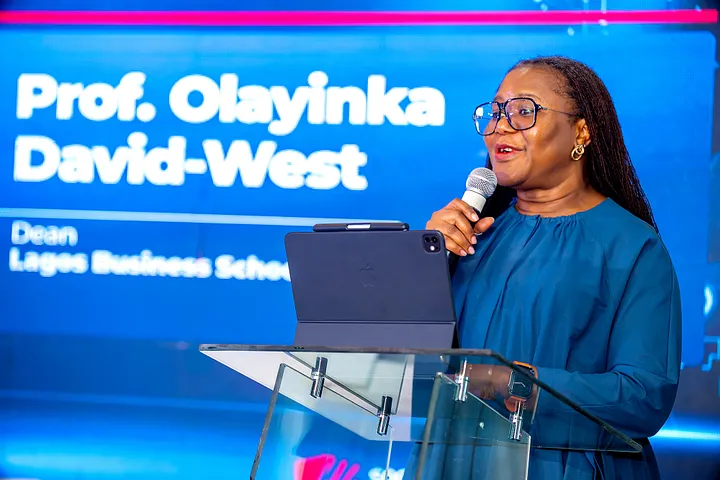
This framing set the stage for one of the most compelling insights of the day. In her keynote remarks, Professor Olayinka David West, Dean of Lagos Business School challenged a long standing mindset that continues to limit women’s advancement. Using the analogy of a competitive game, she observed that many women are still “fighting for the single remaining seat.” Her response was both simple and profound: “Women must stop fighting for the single remaining seat and begin adding chairs.”
The idea speaks directly to a deeper structural problem. When leadership is treated as a scarce resource, inclusion becomes a competition rather than a system. Professor David West pushed further, warning that mere presence is not enough. Being at the table without influence, she noted, is “a polite cage.” The real goal, therefore, is not visibility but authority, moving from occupying space to shaping decisions.
A practical question then emerges. What does this look like in reality? According to her, it requires intentional positioning. Women must step into core governance roles such as finance, audit, and technology, where strategic decisions are made. It also requires responsibility through building pipelines, mentoring others, and ensuring that access is not a one off event but a continuous flow.

While Professor David West addressed access and influence, Mr. Foluso Phillips, Founder of Phillips Consulting, tackled a more fundamental question. Why does governance fail in the first place? His answer cut through complexity. “Governance does not fail because of absent policies; it fails because values are weak.”
This perspective shifts attention from frameworks to behaviour. Many organisations already have well documented policies, charters, and risk systems. Yet these structures collapse when integrity becomes negotiable. Governance, at its core, is about trust between boards and management, institutions and regulators, and organisations and society.
He also reinforced the strategic value women bring into this equation. Drawing from decades of experience, he noted that women tend to interrogate issues more deeply, challenge assumptions more freely, and maintain stronger ethical oversight. However, he cautioned against performative inclusion, warning against “celebration without reform, and rhetoric without action plans.” The implication is clear. Diversity must translate into better decisions, not just better optics.

Adding a personal and forward looking dimension, Mrs. Mojisola Hunponu Wusu, President of Woodhall Capital, addressed a question many women silently grapple with. What does it take to lead boldly in spaces that were not originally designed for you?
Her response was rooted in experience. Reflecting on a defining business decision, she recalled choosing not to hesitate or second guess herself. “I will not shrink, and I will not be afraid,” she declared. This was more than a personal mantra. It was a call for mindset transformation.
She expanded the conversation by highlighting a critical truth. “Institutions do not collapse because of a lack of intelligence; they collapse because of a lack of integrity in their systems.” This reinforced a recurring theme of the event. Governance is lived daily through decisions, not documents.
She also outlined a clear pathway for women. First get on the board, then bring others along, and ultimately move towards leadership and ownership. This progression answers a key question about sustainability. How can women ensure that their presence leads to lasting change? The answer lies in building systems, not just careers.
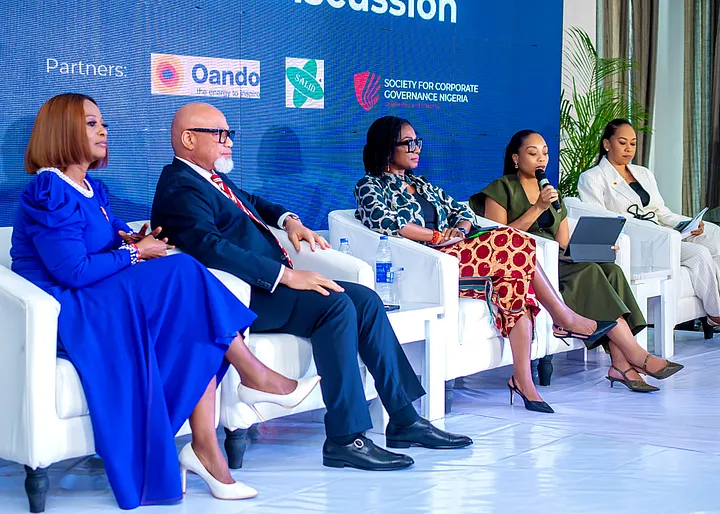
The panel discussion brought these ideas into sharper focus by addressing practical realities. With female representation on NGX30 boards now exceeding 31 percent, the conversation naturally shifted. What comes next?
Dr. Nneka Okekearu offered one answer by redefining accountability itself. Women, she explained, often look beyond financial results to consider broader stakeholder impact. This approach answers a critical governance question. What does success truly mean? Not just profit, but sustainability, ethics, and long term value.
Mr. Adeyemi Adeyinka addressed the future of governance in a digital world. He emphasised the need for women to play active roles in technology oversight and policy, arguing that inclusion in these areas is no longer optional but essential for balanced decision making.
Dr. Chizor Malize highlighted the importance of structural support. Progress is not accidental. Policies and advocacy such as past efforts to increase women’s representation in banking leadership have produced measurable results. She stressed that senior women must continue to “keep their hands open to lift others,” ensuring that progress does not stall.
Mrs. Folasade Ibidapo Obe drew attention to critical governance blind spots, from weak AI policies to ineffective whistleblowing systems. Her insights answered a pressing question for organisations. Where are the hidden risks? Often, she warned, they exist in areas leaders assume are already under control.
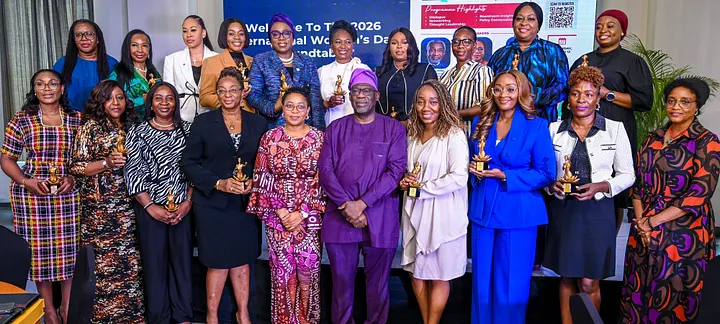
Beyond the discussions, the recognition of 30 Custodians of Corporate Governance served as a powerful reminder that impact is already happening, often quietly and behind the scenes. These women represent the bridge between policy and practice, ensuring that governance is not just designed but implemented.
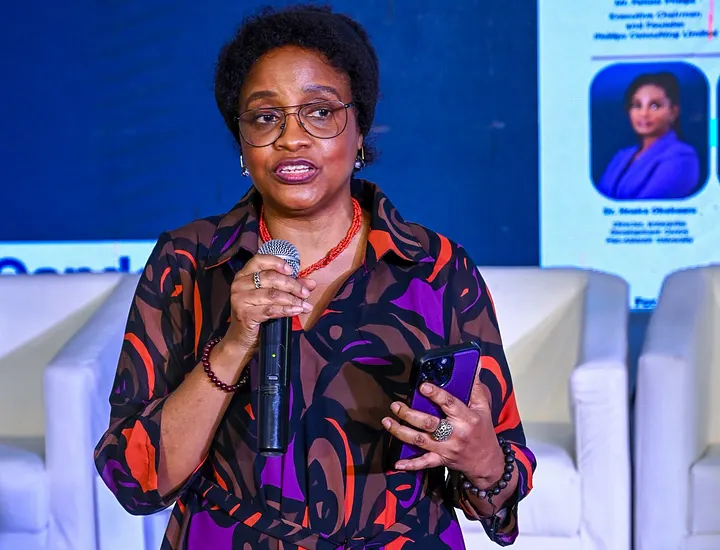
In her closing remarks, Mrs. Rabi Isma brought the conversation full circle, emphasising that governance is ultimately about values in action. The challenge is not just to talk about accountability, but to build it intentionally and consistently.
The message from SCGN’s roundtable is both timely and urgent. The question is no longer whether women should be included in governance, but how their inclusion can transform systems. The answers are already emerging through courage, competence, and collective responsibility.
For us as a society, we believe that the next step is clear. Move beyond representation and lead with purpose.